Florence Nightingale Award for Excellence in Healthcare Data Analytics now open
The award recognises practitioners in applied health care data analytics who have gone the extra mile in delivering innovative improvements for the health care system.

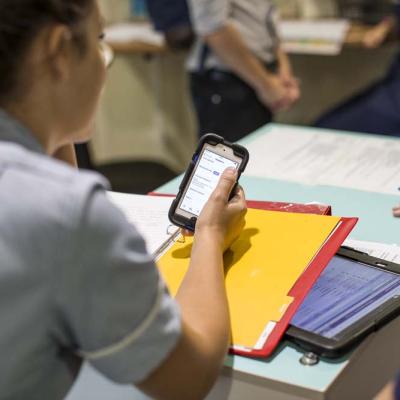
The Florence Nightingale Award for Excellence in Health and Care Analytics recognises practitioners in applied health and care data analytics who have gone the extra mile in delivering innovative improvements for the UK’s health.
Entries for the 2025 award are now open and the deadline for applications is midnight, Wednesday 30 April 2025.
The full entry criteria, entry form and guidance document for applicants are available on the Royal Statistical Society website.
If you have any questions about your application, please email nightingaleaward@rss.org.uk.
The 2025 winner will be announced and presented their award at a ceremony in London in July 2025.
Entries must demonstrate how the applied analysis has brought about positive change in the delivery or planning of care and substantial improvement in patient outcomes.
Any health and care organisation that provides, commissions, supports or delivers health services free at the point of care in the UK, in primary, secondary or tertiary care, or across boundaries such as social care, is eligible to enter. Those working in health and care data analytics who work in conjunction with a health and care organisation free at the point of care are also eligible to enter.
Entries can be submitted by teams or individuals themselves, or they can be nominated by others.
The Royal Statistical Society (RSS) and the Health Foundation launched the award 2020, marking the two-hundredth anniversary since the birth of Florence Nightingale. While known for her work as a nurse, Florence Nightingale was also a statistician and was the first female fellow of the RSS in 1858. She revolutionised nursing through her investigative statistical work and her striking use of data visualisation.
The award, now in its sixth year, is aimed at UK practitioners whose work in health and care data analytics has led to significant improvements in patient care in a health and care system in the UK.
The award recognises projects carried out or started in the previous calendar year, either by teams or individuals. Applications from ongoing projects are also welcome.
The 2024 award was given to the Perinatal Institute for their project that involved the development of software that helps NHS trusts to better assess increased-risk pregnancies. The software flags anything of concern to clinicians and so helps prevent potential harm and reduce the rates of stillbirth. Highly commended in 2024 was a project by NHS Cheshire and Merseyside which used linked data to help deliver solutions to the problem of fuel poverty and its impact on the health of those affected.
The 2023 award was jointly awarded to two teams for their projects related to COVID-19. A team led by the University of Liverpool won for a project that involved setting up the world’s first city-wide, voluntary COVID-19 rapid antigen testing pilot in Liverpool. Data from the project informed UK and international pandemic policy. A collaboration between the universities of St Andrews, Aberdeen, Edinburgh, Glasgow and Strathclyde also won for their project that analysed the care records of the entire adult population of Scotland in order to estimate the prevalence of long COVID. The results of the study have informed Public Health Scotland’s provision for long COVID patients.
The 2022 award was given to the Visual Analytics Team at East London NHS Foundation Trust for their project to develop an improvement-focused quality management system using integrated apps. The team used data visualisation software to develop a series of apps to provide staff with easy access to clinical and non-clinical information that can help with decision making.
In 2021, the award was given to the COVID-19 Population Risk Assessment team, for their predictive model, QCovid®. This model combines characteristics such as age, ethnicity, gender and deprivation from a number of national datasets to estimate an individual’s risk of catching and then being hospitalised or dying from COVID-19.
There were joint winners of the inaugural award in 2020. A team of data analysts from NHS Blood and Transplant won for their algorithm to determine allocation of kidneys from deceased organ donors to patients on the UK kidney transplant waiting list. The other joint winner was a team from Barking, Havering and Redbridge University Hospitals NHS Trust and The Alan Turing Institute which developed a ‘guardian angel’ app to assist nurses when triaging patients in an emergency department.
The award recognises practitioners in applied health care data analytics who have gone the extra mile in delivering innovative improvements for the health care system.
 About 4 mins
As the winners of the Florence Nightingale Award for Excellence in Healthcare Data Analytics are announced, Ellen Coughlan reflects on the importance of health care analytics in supporting innovation ...
 About 6 mins
Hannah Knight explores Florence Nightingale’s work as a data pioneer and encourages recognition of practitioners who deliver innovative improvements for patients.
