
How does emotional support affect young people’s mental health?
The role of social and economic factors
 About 15 mins
- Mariah Kelly
- Alex Kennedy
- Jade Okeke
- Share on LinkedIn
- Share on Bluesky
- Share on X
- Share by email
-
Link
Copy link
- Share on LinkedIn
- Share on Bluesky
- Share on X
- Share by email
-
Link
Copy link
In this briefing

Share this page:
- Share on LinkedIn
- Share on Bluesky
- Share on X
- Share by email
-
Link
Copy link
There is a risk of viewing emotional support as something that takes place behind closed doors and that is not responsive to policy change. But our findings show that social and economic factors – such as poverty and parental employment patterns – can shape family members’ capacity to offer good emotional support to young people. Good emotional support is an important protective factor for young people’s mental health.
This briefing highlights the challenges faced by many young people, parents and caregivers, and identifies policy changes to support stronger relationships between young people and their families. We call for greater attention to young people’s health within policy areas across government, and increased support for those parenting adolescents.
Introduction
Worsening mental health among young people is one of the most pressing societal challenges. Today’s young people have the poorest mental health of any age group in the UK, whereas two decades ago the reverse was true. According to NHS data, 1 in 5 children and young people in England aged 8 to 25 years has a probable mental disorder. As well as the devastating consequences for young people and their families, the Future Minds Campaign estimates the long-term impact of mental health problems in childhood cost the UK over £1tn in lifetime lost earnings.
The causes of children and young people’s worsening mental health are complex and not entirely understood. A recent review led by the University of Manchester suggests key contributors include declining sleep quality, employment precarity and affordability pressures, social media and smart phone use, and a reduction in children and youth services. The emotional support that young people receive is another important contributor towards their mental health.
In the context of the decline in young people’s mental health, it is particularly important to understand young people’s experiences of emotional support and how this can act as a protective factor. This was the focus of our 3-year research programme, through which we funded four projects exploring the key role that emotional support from family plays in young people’s lives. In this briefing, we set out important findings from these projects, highlighting the challenges faced by many parents/caregivers, and identifying policy changes to support stronger relationships between young people and their families. This research programme focused on family relationships but all children and young people deserve good emotional support. Some of the findings and recommendations may also be relevant to those facing the biggest barriers to emotional support, such as children in care, although this is an area where further work is needed.
The policy landscape for children and young people
Policy areas across government have an impact on the context in which young people grow up – from employment policy to housing, the welfare system and funding for local government. The emotional support that young people receive is directly relevant to several of Labour’s five missions, particularly the opportunity mission, the health mission and delivering economic growth, but it has had little attention in the past year.
Policy interventions to support good family relationships and young people’s mental health fall into two broad categories, and we look at both in this briefing:
- interventions to affect wider social policies where the impact on emotional support has not necessarily been recognised
- specific initiatives for young people and families such as youth services, family hubs and support for parents/caregivers.
On the latter, the government has committed to ‘break down barriers to opportunity’ for children and young people. This includes a focus on family security, ensuring every child has a safe and loving home, and aims to address child poverty through the forthcoming child poverty strategy. The government has also announced it is co-developing a national youth strategy with young people, which will focus on youth services.
The government aims to roll out mental health support teams in schools and colleges, to reach full national coverage by 2029/30. It will also deliver embedded support for children and young people’s mental health in new Young Futures Hubs, alongside a wellbeing offer, to ensure there is no ‘wrong front door’ for young people seeking help. The 10-Year Health Plan commits to ensuring neighbourhood health services work in partnership with family hubs, schools, nurseries and colleges to offer timely support to children, young people and their families.
However, given the scale of the mental health crisis affecting young people, we believe that more can be done to develop a preventative approach to mental illness as part of a broader strategy to improve health and address health inequalities. A key component of this should be considering how wider social policies can better support relationships between young people, parents/caregivers and families, given the important role this plays in protecting young people’s mental health.
The importance of emotional support for young people’s mental health
Emotional support plays a crucial role in young people’s resilience to the challenges associated with the transition to adulthood. Good relationships are important in supporting young people with education, finding and sustaining employment and navigating other relationships. Family support is associated with outcomes such as school performance and academic attainment, as well as better physical and mental health.
There is a well-established relationship between emotional support and young people’s mental health. Research has found that support from family is the type of social support most consistently protective against depression for adolescents. A longitudinal study in the US found that people aged 11 to 17 who reported higher family support also reported lower depressive symptoms and lower anxiety symptoms. Other studies have also found that good paternal and maternal relationships were associated with a lower likelihood of poor mental health. One possible explanation for this is that higher levels of support enable individuals to cope better with stress and adversity.
Findings from our Emotional Support for Young People programme add to this body of evidence – demonstrating how emotional support from families can affect young people’s development, and highlighting just how beneficial such support can be for young people’s mental health.
Our Emotional Support for Young People programme
In our Young people’s future health inquiry, which took place between 2017 and 2024, participants aged 12–24 described a clear link between their mental health and the emotional support they received from their families. They also recognised how social and economic factors shaped their family members’ capacity (or ‘bandwidth’) to offer support.
Out of this, our Emotional Support for Young People programme was born. We funded four projects to develop the evidence base on what shapes the emotional support that young people receive, and the effect this has on their mental health. The projects focused primarily on families, and explored experiences of young people of different ages, ranging from 12 to 22 years old.
The four projects
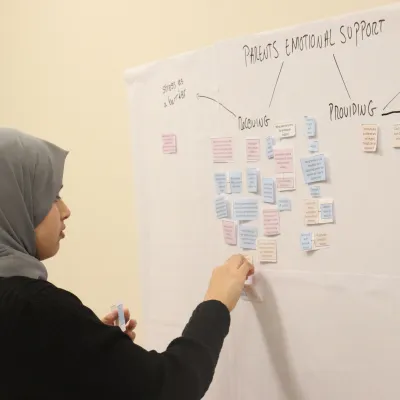
This project explored how parental working patterns affect the level and quality of emotional support given to young people living in Bradford. It used community workshops and interviews with young people and their parents/caregivers, as well as survey analysis from the Bradford Age of Wonder cohort. Their findings and recommendations were written up into an evidence briefing for employers and upcoming journal article.
This project investigated the impact of increased living costs on families’ capacity to provide emotional support in Tower Hamlets, London. Toynbee Hall took a participatory action research approach, holding interviews and workshops with young people and parents/caregivers, as well as a survey of 1,515 UK residents aged 16–22. They have published their findings, recommendations and related resources online.
This project investigated how social factors and adversities interact to impact young people’s family relationships, the emotional support they receive, and their mental health. It involved an analysis of data from the Millenium Cohort. Researchers shared some of their findings in the journal of European Child & Adolescent Psychiatry, Journal of Adolescent Health and the European Journal of Public Health.
This project examines how social and economic factors shape a family’s capacity to support its younger members. It focuses on two distinct communities, Scarborough and York, using qualitative methods including interviews, participatory workshops and arts-based methods. Young people reflected on what emotional support means to them in this video, and wider findings are published here. This project is due to conclude in late 2025.
Research has found that support from family is the type of social support most consistently protective against depression for adolescents.
This briefing draws on key themes from the projects to highlight five critical factors that affect young people’s experience of emotional support:
- parental employment patterns
- poverty and financial stability
- inequalities linked to ethnicity, sex and other characteristics
- support for parents/caregivers
- access to youth and community services.
We find that these social and economic factors shape the quality of emotional support that young people can access – and, in turn, their opportunities for good mental health. This underscores the need for government to introduce an overarching health inequalities strategy that addresses each of these factors.
Social and economic factors impacting emotional support
1. Parental employment patterns
Research from our Emotional Support for Young People programme found a strong link between parental employment patterns and capacity to provide good emotional support to their children. Young people highlighted the importance of parental availability, explaining they felt closer and more able to share their problems where a parent/caregiver was more present. Family mealtimes were identified as being particularly important for parents, caregivers and young people to check in and talk about their days.
Parents’ ability to be present and spend quality time with their children is shaped by the working conditions available to them. The stress of having to work long hours to make ends meet was found to leave many parents and caregivers exhausted and with less time to engage with their children in the way they wanted to.

While the benefits of flexible working for those parenting young children are often discussed, workplace culture and policies that recognise the demands of looking after teenagers could be one way to enable parents and caregivers to support young people’s mental health. Research from the programme shows that more women seek out (and find) flexible or part-time roles than men, furthering the expectation on them to provide more emotional support. This disparity risks reinforcing inequalities between men and women, both at work and at home, as well as having a negative impact on father–child relationships. Employers should create a culture where all staff feel empowered to access flexible working.
Policy implications
These findings show that we must look at employment policy through a health lens. Good-quality employment not only supports employee health but also has wider impacts on their families. The Health Foundation’s Commission for Healthier Working Lives highlighted the importance of job quality for health, and in particular job security, access to flexibility and good people management practices. Research for the Commission also highlighted challenges around excessive job strain and burnout in many public sector occupations across the health and education sectors, where government should be taking a leadership role. Forthcoming legislation in the Employment Rights Bill is designed to improve access to secure job terms and flexible working opportunities, although implementation will determine whether this has a positive impact on worker health.
2. Poverty and financial stability
Poverty is a risk to health. 26% of adults living in persistent poverty are in poor health, compared with 16% of adults not living in poverty. Our research programme finds that poverty, and the resulting stress over household finances, shapes parents’ and caregivers’ capacity to provide emotional support to young people. This is particularly concerning given that children and young people from more socioeconomically deprived backgrounds are more likely to experience mental ill health. According to NHS data, children aged 8 to 16 with a ‘probable mental disorder’ were more than twice as likely to live in a household that had fallen behind with rent, bills or mortgage payments.
The University of Liverpool project found that more than half of children growing up in the UK are persistently exposed to family poverty, poor caregiver mental health, or both. The combination of these exposures is strongly associated with adverse health outcomes in the next generation. The analysis shows that around 40% of the cases of socio-economic behavioural problems among 17-year-olds in the UK can be attributed to poverty and parental mental health problems. Young people who experienced both persistent poverty and poor parental mental health had a more than two-fold increased risk of mental health problems at age 17.
Almost a third of children (31%) were living in poverty after housing costs in 2023/24. Child poverty rates are highest among people from Bangladeshi (65%) and Pakistani (59%) ethnic groups, and lowest among white ethnic groups (24%). Children who have experienced early life social disadvantage, such as persistent poverty, are more likely to perceive lower levels of family support. The University of Liverpool project found that the prevalence of low emotional support was 15.2% for children experiencing persistent poverty, compared with 10.9% for children who were not experiencing persistent poverty.
The cost-of-living crisis has intensified the financial pressures that many families are experiencing. Toynbee Hall’s research found increased pressure on parents and caregivers, heightened stress and fatigue across social support networks, and fewer opportunities for self-care for both parents and young people. Young people’s concerns about their parents’ financial stress prevents some from seeking emotional support, because of not wanting to add to their parents’ burdens.
Policy implications
Our research programme highlights yet more ways that poverty is contributing to the crisis in young people’s mental health. The government should upgrade benefit rates in line with living costs and remove the benefit cap, to ensure an adequate standard of living as a minimum. The forthcoming child poverty strategy must also remove the two-child limit for income-related benefits. This is the single most cost-effective policy option to reduce child poverty: removing this limit would lift 350,000 children out of poverty instantly, while reducing the depth of poverty for a further 800,000 children, at a cost of £2bn.
3. Inequalities linked to ethnicity, sex and other characteristics
Our research programme found that some groups of young people experience particular challenges when it comes to their mental health and the emotional support received from families. When asked if they can talk to a family member when they need to, LGBTQ+ young people were significantly more likely to strongly disagree (31% vs 20%), as were young disabled people (30% vs 20%).
Our report with the Runnymede Trust found that racism reduces opportunities to be healthy, and needs to be understood as a determinant of health. Non-white ethnic groups, especially Pakistani and Bangladeshi families, are more likely to face persistent poverty and poor parental mental health. This harms children and young people in a variety of ways, and inevitably affects the bandwidth of parents and caregivers to provide emotional support.
The Toynbee Hall project also highlighted cultural challenges for young people from second generation migrant families. Of those surveyed, 58% of young people with immigrant parents reported wanting a closer relationship, versus 47% without immigrant parents. Some reported that their parents and caregivers were in ‘survival mode’, focusing on practical support over emotional wellbeing, and cited language and cultural barriers to articulating their emotional needs. These cultural barriers can also extend outside of the home, limiting access to mental health services due to stigma and lack of cultural understanding by professionals.
There are also inequalities by sex, with young women having experienced a steady increase in mental ill health over the past two decades. For women aged 17 to 25, rates of mental ill health are now twice as high as for their male counterparts. The research found that prevailing gender norms affect how emotional support is given and received by young people and caregivers.
Young women faced more expectations to provide support to their family members compared with their male peers. The Toynbee Hall project found that young women were more likely to regularly check in on their family members, despite being less likely to have their family check in with them. These gendered patterns also extend to the provision of emotional support by parents, with prevailing norms meaning that there is a greater burden and expectation on mothers to provide emotional support to young people than fathers.
Young men also reported facing stigma around mental health and difficulties seeking support. Several participants mentioned 'being a man' as a factor inhibiting their ability to open up, even if they wanted to do so.
Policy implications
An evidence review by Plan UK found that gender differences are often neglected in research and there is a critical knowledge gap here. The robustness of evidence into how ethnicity affects incidences and experiences of mental ill health is also mixed.
Our findings highlight the need for attention to be paid to sex and ethnicity within research, policy responses and service design, to better understand differing mental health needs and avoid assuming that interventions will have the same effect on different groups. This should be underpinned by an understanding of how social and cultural factors, such as gender norms, shape people’s experiences of mental health and emotional support.
4. Support for parents and caregivers
Parents and caregivers have many of their own challenges. This briefing has touched on some of them, such as poverty and job quality. There is also relatively little support given those parenting older children and teenagers. Health visiting is a universal offer for all families with babies, with some additional support for families who need it, and within that model there is an explicit focus on parental mental health (as well as the health of the child). For parents of adolescents, support is often only offered once problems have been identified, as opposed to providing preventative, early support. For example, the most recent programme guide for Family Hubs states that funded parenting support should focus on 0–2-year-olds only.
Parental and caregiver mental health is another challenge, and is strongly correlated to poverty. Experiencing their own poor mental health is difficult for parents themselves, but it can also affect children – reducing parents’ capacity to provide emotional support, for instance – leading to a generational effect.
Policy implications
There is, rightly, a policy focus on supporting parents of infants. However, there has been very little attention given to proactively supporting parents of teenagers. The government’s Best Start in Life strategy, published in July 2025, included a commitment to funding Best Start Family Hubs in every local authority: but these will support families with children under 5. It’s positive that these hubs will bring together parenting, health care and education support services, and that these hubs will be based in disadvantaged communities. But the new approach represents a departure from the previous family hubs model which supported families with children aged up to 19 (and up to 25 for young people special educational needs and disabilities).
While the government’s new initiative will enable resources to be more targeted and should ensure more coverage across the country for pre-school children, there is a risk that families with teenagers will be overlooked. Better support for all parents and caregivers is needed, alongside comprehensive action to prevent mental ill health. Ideally there should be a universal offer of support for parents, focusing on prevention, with extra targeted support for those who need it. The Centre for Mental Health advocates for government investment in evidence-based parenting support, such as the Triple P programme. This has undergone comprehensive evaluation in Ireland and is linked to significant reductions in children’s emotional and behavioural issues, along with notable decreases in parental stress and psychological distress. Tailored approaches are available for parents and caregivers of teenagers as well as younger children. The Race Equality Foundation also runs targeted evidence-based parenting programmes called ‘Strengthening Families, Strengthening Communities’, designed to promote protective factors associated with good parenting and better outcomes for children.
5. Access to youth and community services
Good community spaces can allow young people to develop themselves, socialise with peers and feel a sense of belonging, fostering better mental health. Such spaces can also provide routes for young people to access emotional support outside of family relationships, and may be particularly important for some groups, such as LGBTQ+ young people, to access support and a shared community if this is not available to them at home.
Both young people and parents/caregivers involved in the Toynbee Hall project emphasised the importance of intergenerational community activities that support wellbeing and social networks, such as arts, crafts, cooking and sports. However, these services may not be widely available and there are financial barriers to participation. There are geographical disparities in access, with rural areas often struggling with economic deprivation and a lack of infrastructure, and urban areas having access to more services but often facing financial constraints and oversubscription.
Policy implications
The Local Government Association estimates there is still a shortfall of £2.3bn in council finances in 2025/26, with the National Audit Office estimating an £8bn shortfall by 2028/29. These pressures are forcing councils to make difficult choices about cutting services, making it harder to focus on preventative services (including youth services) that support good health. There has been a real-terms cut of £1.2bn to youth services in England between 2010/11 and 2023/24.
The Local Government Finance Settlement for 2025/26 demonstrated that, while funding for local government has increased, it is still not enough to allow local authorities to meet the demand for acute services while transitioning to a focus on prevention and providing the high-quality services that their residents rely on. Additionally, with around 70% of local authority funding spent on social care for children and adults, a more sustainable funding solution for social care must be found urgently.
The government is launching Young Futures Hubs across the country, which will bring together community-focused services under one roof to help teenagers who are at risk of becoming involved in crime, facing mental health challenges or are vulnerable in other ways. The government also recently announced the Better Futures Fund, which will support up to 200,000 vulnerable children and young people through a social outcomes partnership model, and £88m in new funding for youth clubs and after-school activities. While this increased support for young people is welcome, there is still a shortfall of universal, preventative offers of support that can help young people before problems arise.
This briefing does not cover mental health services, but it is worth noting that young people involved in our research programme reported wanting a greater focus on prevention within such services, and better understanding of cultural context for young people from minority ethnic backgrounds.
Conclusion and recommendations
Our findings have shown how social and economic factors put a strain on relationships between young people and parents/caregivers. Individual and cultural factors can also affect the emotional support that young people receive – and inequalities in access to emotional support can have a big impact on young people’s mental health, as well as their development and future outcomes more broadly.
In the context of the decline in young people’s mental health, and the role of emotional support as a protective factor, this research programme highlights the importance of developing policies that foster good emotional support and strong family relationships.
Attention must be paid to better understanding and addressing the wide range of factors that are impacting young people’s mental health, as well as ensuring that parents/caregivers are supported effectively. We conclude that the government should:
- develop a cross-government strategy to address health inequalities, with a focus on prevention and addressing mental as well as physical health
- reduce poverty through the forthcoming child poverty strategy and improvements to the social security system, including by removing the two-child benefit cap as a first step
- ensure that job quality supports health, with job security, access to flexibility, and good people management practices, and encourage employers to understand the needs of parents/caregivers of adolescents
- pay greater attention to sex and ethnicity within research, policy responses and service design to better understand differing mental health needs and experiences of emotional support
- invest in rolling out evidence-based parenting programmes, including increased support for parents/caregivers of adolescents
- proceed with launching Young Futures Hubs for young people in every community
- provide sustainable local funding that enables increased provision of open access youth services for all.
We would like to thank the researchers from all four project teams for producing the research, analysis and insights that have informed this briefing. Thanks to colleagues who have inputted to early drafts: Bridget Lockyer from Bradford Teaching Hospitals NHS Foundation Trust, Charlotte Rainer from the Children and Young People’s Mental Health Coalition, Oisin Sweeney and Rushaa Hamid from Toynbee Hall, and Nicholas Adjei and David Taylor-Robinson from the University of Liverpool. We are also grateful to colleagues at the Health Foundation for their contributions, particularly Jo Bibby, Jenny Cockin, Sally Kitchener, Rebecca Tempest and Sarah Witts. Errors or omissions remain the responsibility of the authors alone.